
Taking the B-line
What a mountain bike trail teaches leaders about spotting a better route, and having the confidence to take it.
Every day, leaders make decisions that move their teams toward their goals. But sometimes it can feel like they're riding the same trail over and over again. A path that started out fun and challenging can become taxing, even stressful. That's when leaders need to step back, look at the path they're on (or the one they're being asked to take), and look for new ways around the difficult sections. The goal may not need to change. The route to get there might, if a leader can spot it and feels confident enough to take it.
There's a great concept in mountain biking that shows how leaders can find a new route. It's called the A-line and the B-line.
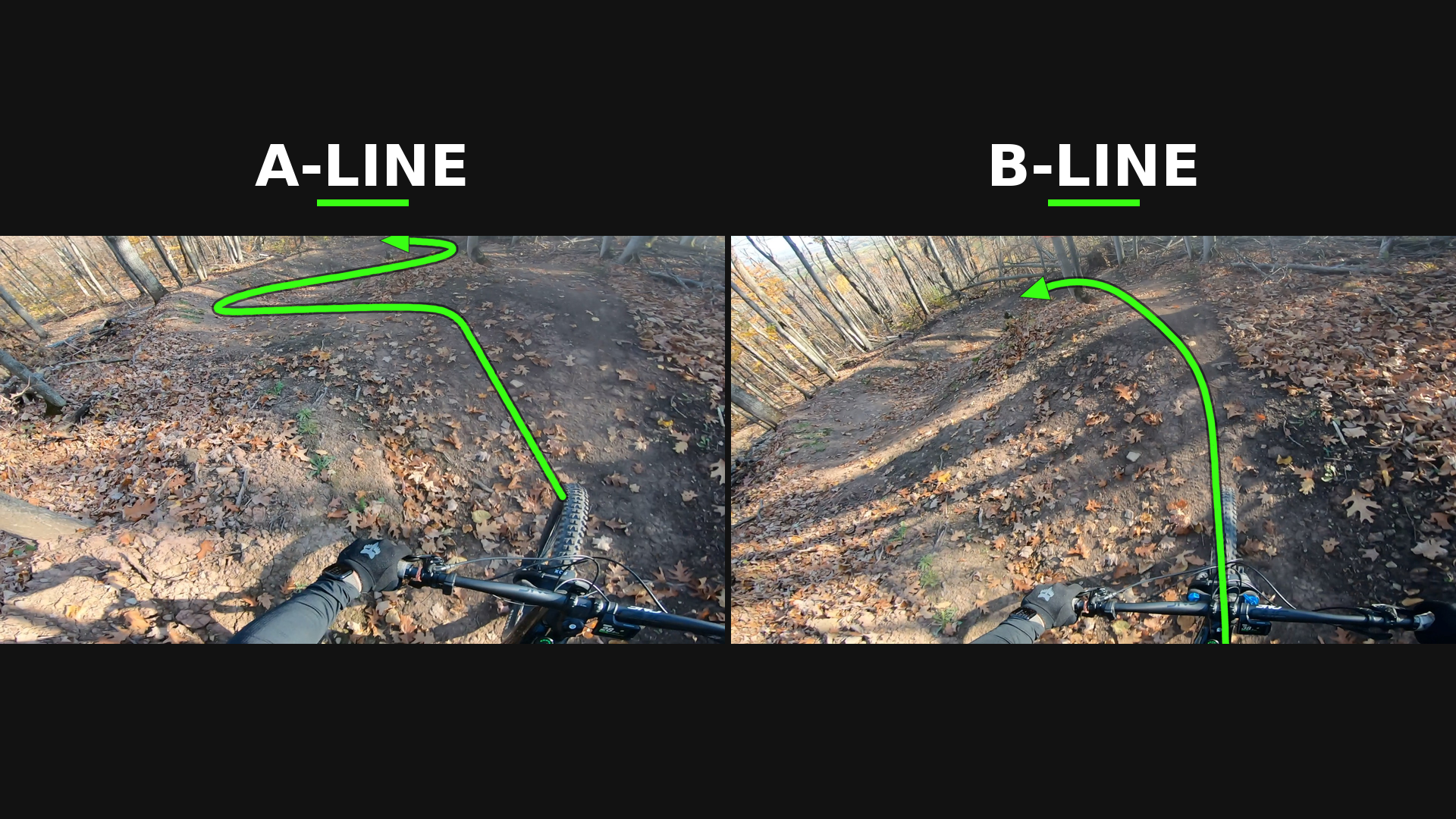
The A-line and the B-line
The A-line is the path that's set for you. Trail builders study the landscape and decide the best line for the trail to follow, and over time the riders who use it shape that line further. A good trail has obstacles: hills, turns, berms, jumps and rock gardens (piles of rock that are tricky to ride through). The A-line is designed to take riders through those obstacles, to inspire adventure and deliver a fun ride within the structure of the trail. Sometimes, though, the A-line includes a hill too steep to climb or a rock garden so technical it can't be ridden with ease. When obstacles get that hard, or start getting in the way of the fun, a B-line often forms.
The B-line helps riders get around the obstacles that challenge them. Sometimes it forms as a second option that's more direct or quicker. Either way, a B-line only appears after the A-line is set and its obstacles have been explored. It becomes a decision you make on the trail: do I ride the obstacle, or go around it and meet the trail further down? Do I see the tough section coming and spot a quicker way past it? The B-line can make a trail more fun, easier or faster, and sometimes it's the only safe way around a dangerous section.
Leaders ride the A-line
Leaders are often told to take the A-line. Sometimes that direction comes from others, and sometimes it's just the way they've always gone. The A-line is full of the milestones and results a leader needs to deliver. It has turns and obstacles, like getting support from a matrix team, and jumps and bumps, like budget constraints and reporting. It has exhilarating moments, like big sales and wins, and steep climbs, like coming back from tough results. It can get crowded too, with other riders (leaders) backed up on the same trail, much like when the resources available to a team get stretched thin. The A-line has it all: moments of fun and moments of difficulty.
Leaders often put up with those obstacles because the path was set for them. But if they keep their eyes open and have the confidence to make a different call, there may be a route they haven't spotted yet: the B-line.
Look out for the B-line
The B-line shows itself to leaders who keep their eyes open and can make quick decisions. As a rider approaches a tough obstacle, spotting the way around it and quickly deciding to leave the main line is what makes the B-line possible.
Insights recently released a study on global change readiness. More than 800 HR professionals were surveyed, and 87% said organizational priorities were communicated clearly during change. Yet 46% experienced confusion over who had decision-making authority. So if we picture leaders riding the A-line, are they able to spot the opportunity to take the B-line? And if they do spot it, do they have the authority to take a different route? Taking the B-line means having visibility of the trail ahead, and then the confidence to choose a different line.
Riding the same trail
Choosing the B-line has consequences. If leaders changed course every time they saw an obstacle ahead, they'd miss the chance to grow and develop. The B-line is called the “B” line for a reason: it isn't how the trail is meant to be ridden. Leaders still need to ride the technical rock gardens, hit the big jumps and grind up the steep climbs.
But when leaders look at the whole ride, the goal at the end of the path they're on, the occasional B-line might get them there a little quicker or a little easier. Going around a difficult section and seeing it from a different angle can also give them insight for the next time they ride that trail. The challenge feels less daunting, and a leader can build the courage to take on the jump they've been avoiding.
The A-line and the B-line are part of the same trail, heading to the same place. A leader just needs to explore their options.
This mountain biking concept is a reminder that leadership is everywhere. The world offers us lessons every day if we look for them. In Insights' report on global change readiness, 96% of respondents said they had frameworks for talking about leadership behaviour, but only 33% used them consistently and widely. Leadership development doesn't have to be complicated. It just has to be usable and memorable.
Free report
Insights Global Change Readiness Report
To learn more, download Insights’ free Global Change Readiness report.